Drilled Bell-Bottom Piers
A wider footing at the bottom of the shaft gives the pier something to hold onto — in both directions.
Serving Copperas Cove, Killeen, Harker Heights, Nolanville, Gatesville, Lampasas
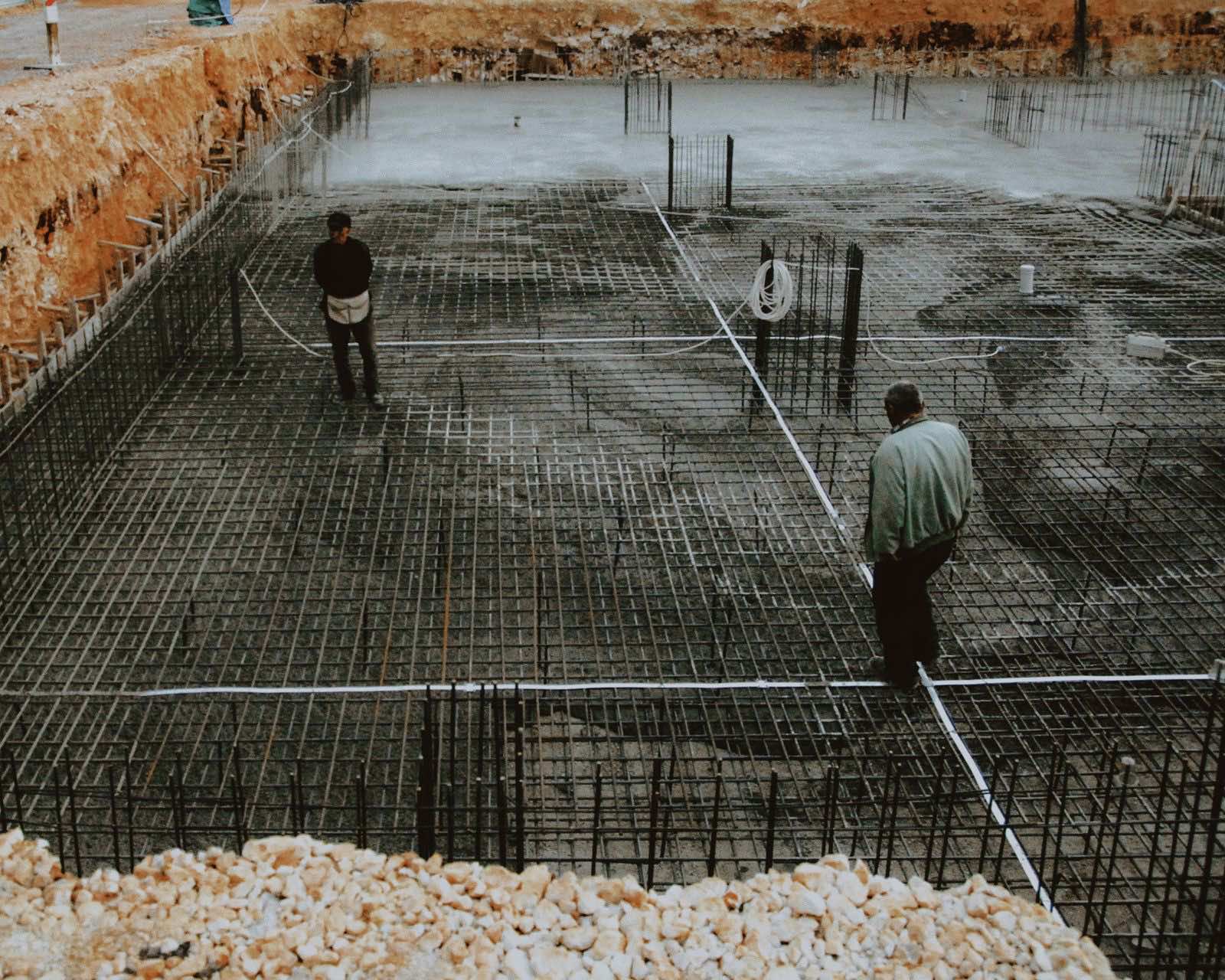
A bell-bottom pier starts as an augered shaft. At the bottom, a belling tool flares the base outward into a wider footing. The shaft is then reinforced with steel and poured in place, so the finished pier is a single continuous concrete element rather than a stack of segments.
That flared base is what makes the method distinctly Texan. Expansive clay doesn't only let a house down — when it takes on moisture it pushes back up, and uplift is a real failure mode here. A belled base gives the pier mechanical anchorage against that upward push. Pressed segmented pilings, by design, offer very little resistance to it.
The tradeoffs are honest ones: drilling is slower and messier than pressing, the excavation footprint is larger, and poured concrete needs cure time before it can carry load. Where uplift is the concern rather than pure settlement, engineers in this state frequently consider that tradeoff worth making.
Common requests
- Foundations showing heave or uplift rather than only settlement
- Pier-and-beam structures needing new or replacement support piers
- Homes where an engineer specified a reinforced, poured-in-place system
- Additions, porches, and covered patios needing purpose-built support
- Sites where segmented pilings have previously failed to hold
- Structures on lots with a history of soil movement in both directions
Signs it's time
- Interior high spots — a floor that has risen rather than dropped
- Doors binding at the top of the frame rather than dragging at the bottom
- Cracking that appears and closes seasonally with wet and dry cycles
- Movement that followed the removal of a large mature tree
- An engineer's report identifying uplift as the governing mechanism
Good to know
- Published Texas ranges for drilled bell-bottom piers run roughly $800–$1,500 per pier. Partial-perimeter jobs are commonly quoted in the $13,000–$18,000 range, with small jobs lower and full perimeter-plus-interior work substantially higher.
- Expect more site disruption than pressed pilings: larger spoil piles, a bigger work zone, and heavier equipment access requirements.
- Concrete has to cure before the pier carries load, so the schedule is longer than a same-week press-and-lift job.
- If a big tree recently came down near the foundation, tell the estimator. ASCE guidance notes that removal can cause upheaval as soil moisture recovers, and that a waiting period before repair is sometimes the right call.
- Reinforcement details matter. Ask what rebar cage and bell diameter are specified, and get it in the written scope.
Drilled Bell-Bottom Piers — frequently asked questions
Why would I choose drilled piers over pressed pilings?
Primarily when uplift from expansive clay is a concern, not just settlement. The belled base anchors the pier against upward soil pressure, which segmented pressed pilings do not meaningfully resist. Drilled piers are also reinforced continuously rather than stacked, which some engineers prefer for that reason alone.
How long does the concrete need to cure?
Long enough that it changes your project timeline — ask the contractor for the specific cure period in their scope before load is applied. This is the main scheduling difference between drilled and pressed methods.
Is this method used on slab foundations or only pier-and-beam?
Both. Bell-bottom piers are used under slabs and as replacement support under pier-and-beam structures. The right choice depends on the foundation type, the soil profile, and what the governing movement mechanism turns out to be.
Will drilling tear up my yard?
More than pressed pilings will, yes. Augering produces spoil, and the equipment needs room to work. Ask up front and in writing what site restoration is included — beds, shrubs, and sod in the work zone will be disturbed.
Get an estimate for drilled bell-bottom piers
Describe what you're seeing, attach photos if you have them, and get a clear next step — with no obligation.