Foundation Drainage & Grading
Uneven soil moisture is what moves foundations here. Drainage is how you stop feeding the problem.
Serving Copperas Cove, Killeen, Harker Heights, Nolanville, Gatesville, Lampasas
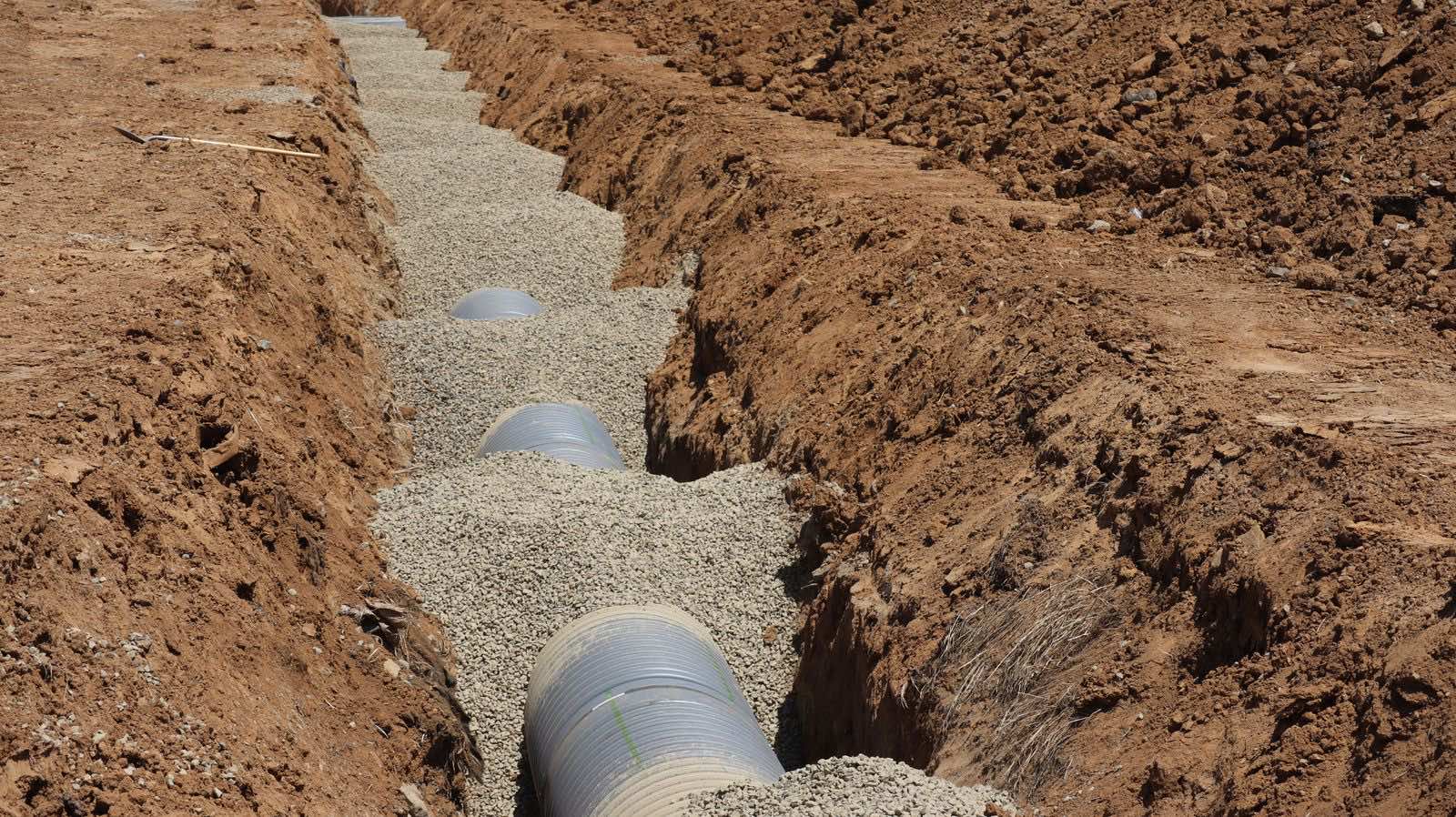
Expansive clay swells when it takes on water and shrinks when it dries. What damages a foundation is rarely moisture itself — it's moisture that varies dramatically from one side of the house to the other, or from one season to the next. A downspout dumping roof runoff at one corner while the opposite side bakes through an August drought is a foundation problem in slow motion.
This is also the step the Texas Section ASCE guidelines put first. Those guidelines explicitly frame non-structural measures — grading, drainage, gutters, moisture barriers, vegetation management — as something that may be a prudent approach to apply prior to or in lieu of structural repair, with monitoring. A contractor who won't discuss drainage before selling you piers is skipping a step the engineering guidance places ahead of the piers.
The guidelines are unusually specific about what good drainage looks like, which makes it easy to check the work you're being sold.
Common requests
- Water standing against the foundation after a storm
- Negative grade — soil sloping back toward the house
- Downspouts discharging at the foundation edge
- Chronically soggy side yards between closely spaced houses
- Runoff from an uphill neighbor or a terraced lot
- Erosion channels cutting alongside the slab
Signs it's time
- Puddles that persist along the foundation a day after rain
- Mulch, soil, or gravel washed away from one section of the perimeter
- A crawl space or garage that takes on water
- Moss, algae, or persistent damp staining on the lower brick course
- Soil visibly pulling away from the slab edge in dry months, then swelling in wet ones
Good to know
- The ASCE guidelines call for a minimum 5 percent slope away from the foundation — 6 inches of fall in the first 10 feet — all around the structure where practicable.
- Swales should run at a longitudinal slope of at least 2 percent (6 inches in 25 feet), and no less than 1 percent.
- Subsurface French drains should maintain a continuous minimum slope of 0.5 percent to a surface outfall, and should include cleanouts. Downspouts should NOT be connected into perforated pipe — solid pipe only, sized for the roof load.
- Published French drain pricing in Texas markets runs roughly $23–$36 per linear foot, with typical whole projects around $2,500–$4,250. Rocky ground raises that, and shallow limestone is common here.
- Gutters and downspouts should discharge well past the foundation and past any abutting planting beds, into a well-drained area — not just a foot or two off the wall.
Foundation Drainage & Grading — frequently asked questions
Should I fix drainage before or after foundation repair?
The Texas Section ASCE guidelines treat non-structural measures — drainage, grading, gutters, vegetation, moisture barriers — as reasonable to apply prior to or in lieu of structural repair, with monitoring to see how the foundation responds. In some cases correcting drainage and watching for a season is genuinely the right first move. In others the structural damage is already done, and drainage is what keeps the repair from having to be redone.
Can drainage work alone fix my foundation?
It can stop or slow further movement by making soil moisture more uniform, and in some cases foundations partially recover. It cannot lift a settled section back into position — that requires underpinning. Anyone promising that a French drain will fix existing settlement is overselling.
What does a French drain actually do?
It intercepts subsurface and surface water in a gravel-filled trench containing perforated pipe, and carries it away to a discharge point. The details that determine whether it works are slope, outfall location, and cleanouts — a level drain with nowhere to discharge is just a gravel trench holding water against your foundation.
How much does drainage work cost around here?
Published Texas ranges are roughly $23–$36 per linear foot for French drains, with typical projects between $2,500 and $4,250. Rocky soil, trench depth, proximity to the foundation, and root removal all push it up — and shallow limestone across much of this area is a genuine local cost factor.
Get an estimate for foundation drainage & grading
Describe what you're seeing, attach photos if you have them, and get a clear next step — with no obligation.