Steel Piers & Deep Underpinning
When a foundation needs to reach past unreliable shallow material, steel goes deeper than pressed concrete can.
Serving Copperas Cove, Killeen, Harker Heights, Nolanville, Gatesville, Lampasas
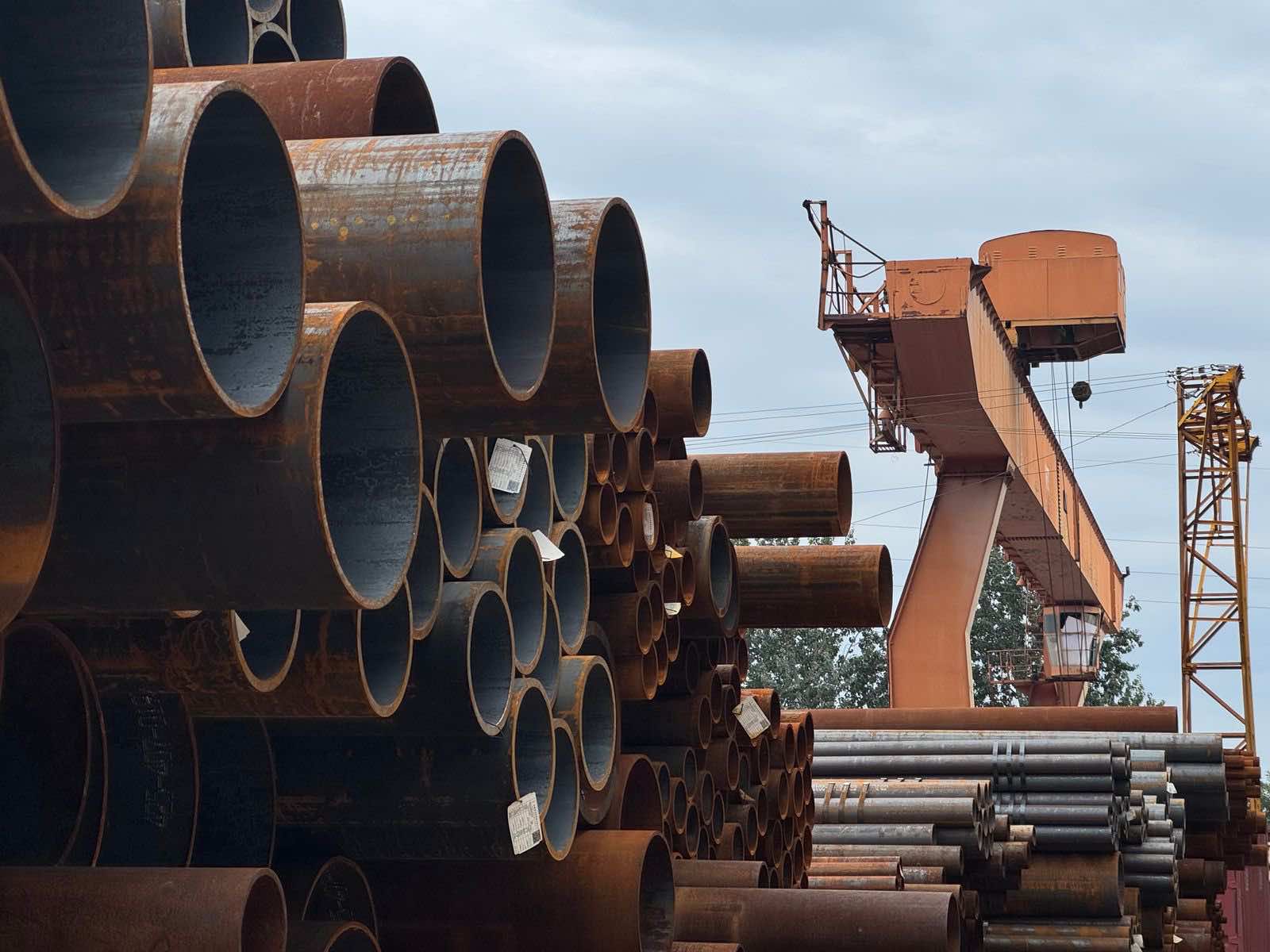
Steel piers — also called push piers or steel pilings — are hollow steel pipe sections driven hydraulically beneath the foundation until they reach a dense bearing stratum. Where a pressed concrete piling might reach refusal in compacted clay at ten or twelve feet, steel can be driven toward shale or rock considerably deeper.
That extra reach is the whole point, and it's also the whole cost difference. Steel is the more expensive option per pier in every published source, and it isn't automatically the better one. It earns its price on heavier or two-story structures, on lots with deep engineered fill, and where an engineer has reason to distrust what a shallow refusal is actually bearing on.
Around Copperas Cove and Killeen the case for steel is often about what's underneath rather than what's on top. Cut-and-fill subdivisions on the hilly Lampasas Cut Plain terrain can leave half a building pad on native rock and half on imported fill. That's exactly the geometry that produces differential movement, and exactly where pier depth deserves engineering judgment instead of a standard spec.
Common requests
- Two-story or masonry-heavy homes needing greater load capacity
- Lots with deep or poorly documented engineered fill
- Sites where an engineer has specified deeper bearing than pressed pilings reach
- Additions and room extensions that settled away from the original structure
- Repairs where a previous pressed-pile job did not hold
- Commercial and light-industrial slabs in the Killeen area
Signs it's time
- Settlement that continued after an earlier underpinning attempt
- Movement concentrated on the fill side of a cut-and-fill lot
- Large elevation differentials across a single structure
- An addition separating visibly from the main house
- An engineer's report specifying a deeper bearing requirement
Good to know
- Steel costs more per pier than pressed concrete in every published source — the deep-and-heavy end of Texas underpinning is commonly quoted in the $1,000–$3,000 per pier range. Verify what's driving the recommendation before paying the premium.
- Depth is the reason to choose steel. If a proposal recommends steel without explaining what it needs to reach, ask that question directly.
- Steel piers install with less excavation disruption than drilled piers, and they can be loaded immediately — there's no concrete cure time in the schedule.
- Installation resistance can be measured as the pier is driven, which gives a real-time capacity check that pressed pilings don't offer.
- As with any lift, supply and drain lines should be pressure-tested afterward. This is standard engineering practice, not an upsell.
Steel Piers & Deep Underpinning — frequently asked questions
Steel piers or pressed concrete pilings — which is better?
Neither is universally better; they solve different problems. Pressed concrete pilings are the default, highest-volume method in Texas and cost less per pier. Steel goes deeper and is warranted when the shallow bearing material is unreliable or the structure is heavy. The honest answer depends on what an engineer finds under your specific lot, which is why an independent evaluation is worth more than a comparison chart.
How deep do steel piers go?
Deeper than pressed concrete — trade sources describe steel being driven toward shale or rock at roughly 20–40 feet where concrete refuses at 10–12. Actual depth is entirely site-specific, and in this area shallow limestone can change the answer dramatically from one lot to the next.
Are helical piers the same thing?
No. Helical piers are screwed into the ground with helix plates rather than pushed, and the installation torque correlates to load capacity. They're genuinely useful for lighter loads — porches, additions, light structures — but they're less common for residential slab repair in Texas than pressed or drilled methods.
Do steel piers rust out?
A fair question to ask any contractor directly. Ask what wall thickness and coating are specified, and get the answer in writing as part of the scope. Published system specifications vary meaningfully between manufacturers.
Get an estimate for steel piers & deep underpinning
Describe what you're seeing, attach photos if you have them, and get a clear next step — with no obligation.